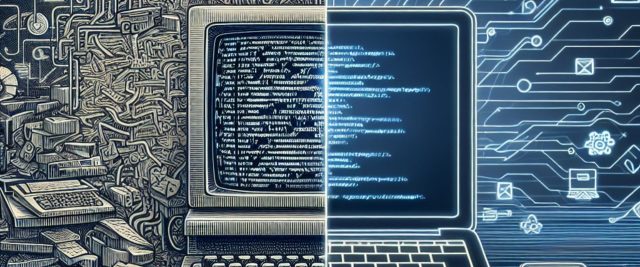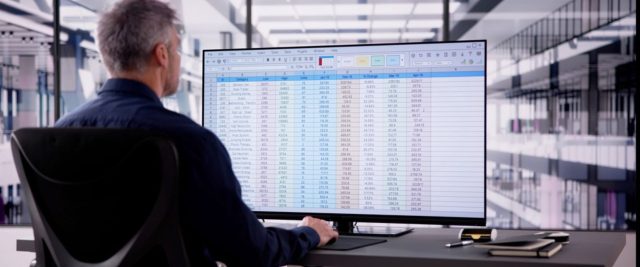

Even successful companies face common challenges: critical business operations running on outdated technology. As we network in Arizona (and across the Southwest), we run into many successful companies that span industries, including construction, finance, healthcare, real estate, technology, and education, managing essential operations (ERP, CRM, Project Management, HR, etc.) on aging machines tucked away in back rooms.
These systems, often built on old platforms like Access, FoxPro, or an old IBM AS/400, still exist because they do the job (albeit sometimes painfully). They usually contain years of valuable data but present escalating risks that can threaten entire organizations. Let’s discuss how you can update your legacy systems with customized software for excellent productivity, time savings, and improved cybersecurity.
Legacy Application Challenges Facing Today’s Businesses
The systems that once powered your success may now generate serious vulnerabilities. Here’s what we’ve seen recently:
- Security risks increase: Once vendors discontinue support, your exposure increases significantly. Without regular patches, systems become excellent targets for ransomware or data breaches. For example, the recent Nevada State attack underscores how devastating these risks have become. For months, hackers exploited legacy system vulnerabilities, took many public services offline, and cost the state $1.5 million in recovery costs.
Beyond external threats, outdated systems lack modern cybersecurity protocols like multi-factor authentication or role-based access controls, leaving sensitive data exposed to insider threats. Compliance requirements such as HIPAA, PCI-DSS, and SOC 2 also assume a baseline of security capabilities that many legacy platforms simply cannot meet, putting organizations at additional risk of regulatory penalties.
- Daily Operational Friction: Beyond security, legacy applications create constant headaches. Many include poor interfaces that complicate data access and movement, and getting information into or out of the system often requires manual workarounds or custom middleware that adds costs and delays.
- Prone to Catastrophic Failure: Legacy systems are at a significantly higher risk of sudden, unrecoverable failure for several reasons. The hardware they depend on ages out of production, making replacement parts scarce or unavailable. Meanwhile, the developers who originally built them retire or move on, leaving little institutional knowledge of how to diagnose or repair deep issues when something goes wrong.
- Difficult to Adapt: It can be nearly impossible to add valuable new features. Legacy platforms were architected around the constraints of their era, lacking the APIs, modularity, or processing capacity needed to support modern capabilities like mobile access, real-time integrations, or AI-driven analytics. Even minor changes can require expensive custom development and carry a high risk of unintended side effects.
- And, finally, it can be tough to find IT staff who can support the systems, often leaving businesses at the mercy of the small firms that built the systems in the first place.
Why Application Modernization Matters for Your Industry
Different industries face distinct needs and challenges when updating legacy applications; however, the end goals are typically similar: increased efficiency, broader reach, and enhanced functionality and user experience.
Any organization, regardless of sector, that relies on legacy systems will face similar problems stemming from disconnected workflows, compounding security vulnerabilities, and a widening gap between modern customer expectations and operational capabilities. Rather than a temporary band-aid, application modernization solves the root of these issues by replacing aging infrastructure with flexible, scalable platforms built for today’s demands.
The benefits of modernized platforms extend beyond the customer experience and positively impact everyone involved in the business, from entry-level employees enjoying seamless workflows to leadership benefiting from greater data visibility. Additionally, future innovation and growth are supported with scalable, flexible systems that remain competitive in a shifting business and technological landscape.
Application Modernization Strategies That Fit Your Business
Successful modernization doesn’t follow a single path. The right approach depends on your specific circumstances, risk tolerance, budget, and strategic objectives.
- Rehosting (Lift and Shift) moves existing applications to modern infrastructure, typically cloud platforms such as AWS or Azure, with minimal code changes. This strategy delivers quick wins in reliability and scalability.
- Re-platforming involves making targeted optimizations during migration to leverage cloud capabilities without a complete redesign. This middle-ground approach balances speed with meaningful improvements.
- Refactoring restructures existing code to improve performance and maintainability while preserving core functions. Breaking monolithic applications into microservices often falls into this category, enabling greater flexibility and scalability.
- Rebuilding creates new applications from scratch using modern architectures. Though more time-intensive and expensive, rebuilding eliminates technical debt and positions businesses for long-term success.
- Replacing involves selecting and implementing commercial off-the-shelf solutions. Sometimes, the most cost-effective path forward is to adopt proven platforms rather than maintain customer-built systems.
- Integration and encapsulation strategies keep legacy systems running while connecting them to modern applications through APIs and middleware, extending the useful life of stable systems.
Partner with DHX Software for Your Legacy Application Solution
Since our approach focuses on solving core business problems, we don’t offer a one-size-fits-all solution to help customers address these challenges. In some cases, we help our customers secure their existing system and keep it running while they look for an off-the-shelf replacement.
In other cases, we’ve helped integrate the legacy system into other applications, saving our customers significant time while increasing accuracy and improving their visibility into their businesses. We’ve modernized legacy applications and migrated them to cloud environments, including Amazon Web Services and Microsoft Azure.
We are always willing to help our customers select a more modern system and support them throughout the implementation process. If you would like to discuss how to manage and support legacy applications within your business, please don’t hesitate to reach out.