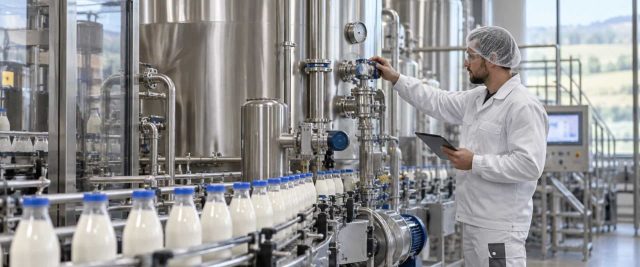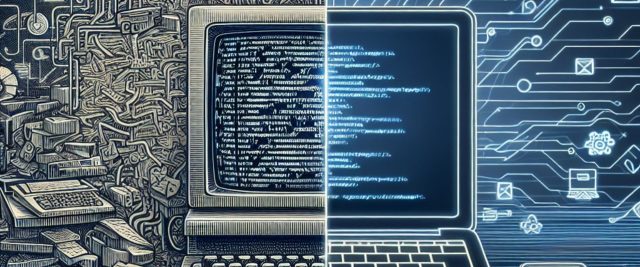
Manufacturing businesses run on tight margins and can’t afford the inefficiencies of disconnected legacy systems. When systems fail or run inefficiently, manufacturing companies face production delays, inventory errors, manual data entry between systems, and reporting that’s always a step behind.
Business owners like you are turning away from traditional ERPs and choosing Odoo for manufacturing. Odoo is a business platform that connects every function of a manufacturing operation into one centralized location. DHX Software is the implementation partner that understands manufacturing from a business owner’s perspective and translates that experience into systems that solve pain points at the root.
What Operational Challenges Do Manufacturing Companies Face With Legacy Software?
- Legacy ERP systems weren’t built for modern manufacturing and can’t keep pace with today’s production demands.
- Errors and manual handoffs happen when systems across production, inventory, and purchasing are disconnected.
- Management is making decisions with out-of-date information.
- Production stoppages or costly overstocks due to inventory miscounts.
- Manually reconciling reporting data from multiple systems.
- Legacy ERP systems can’t scale effectively as production volume increases or as you add production lines.
- Higher costs to maintain a legacy ERP system, while its delivery value stays flat or declines.
How Does Odoo Address Core Manufacturing Business Problems?
How Does Odoo Manage Production Planning and Scheduling?
Confirmed sales orders trigger manufacturing order creation in Odoo, which gives operations managers real-time visibility into capacity and workload across the entire shop floor. Updates are visible immediately if schedules change, without requiring manual communication.
How Does Odoo Connect Inventory and Manufacturing in Real Time?
Odoo automatically checks material availability when a production order is created and will trigger reorder requests to purchasing when stock falls below a set threshold. Inventory updates in real time, eliminating the gap between what is recorded and what is actually on the shelf.
How Does Odoo Reduce Manual Work on the Shop Floor and Improve Quality Control?
By logging production time and output directly in the platform and feeding it into management reporting, Odoo gives shop floor teams clear work order assignments and progress tracking. Instead of being managed in a separate system, quality control checks are integrated into the production workflow.
How Does Odoo Improve Traceability in Manufacturing?
By tracking lot and serial numbers from raw material receipt to finished goods delivery, Odoo gives manufacturers the full traceability that compliance requirements and enterprise customer audits demand.
What Odoo Apps Matter Most for Manufacturing Companies?
- The Manufacturing app handles production orders, work orders, bills of materials, and work center management.
- The Inventory app handles real-time stock tracking, automated reordering, and multi-location management.
- The Purchase app manages vendors and purchase orders tied to production demand.
- The Accounting app covers job costing, financial reporting, accounts payable, and receivable.
- The CRM app ties your sales pipeline directly to production planning.
- The Quality app handles inspection points, quality alerts, and corrective and preventive actions.
- The Maintenance app covers equipment maintenance scheduling, which reduces unplanned downtime.
How Does Odoo Compare to Legacy Manufacturing ERP Systems?
Legacy manufacturing ERPs often mean high licensing costs, expensive customization, longer implementation timelines, and dependence on the vendor for routine changes. Any of these issues can disrupt manufacturing operations. Additionally, many small- and mid-sized manufacturers maintain legacy ERP systems that cost more annually than a full Odoo implementation.
Odoo offers manufacturers many advantages, including:
- Modular deployment, so you can deploy only what you need today and add on as you grow.
- Open-source architecture that is customizable without vendor fees or permission.
- Faster implementation timelines than traditional manufacturing ERPs.
- Lower total cost of ownership over a three- to five-year horizon.
- Continuously updated by a global contributor community.
So, is it time to replace your legacy manufacturing ERP?
How Do You Get Started Modernizing Your Manufacturing Operations with Odoo?
Here at DHX Software, when we start an Odoo implementation, our first step is to ask questions about your operation. We want to know how your production works, where the bottlenecks are, and what the current system fails to do, and this starts with a thorough system assessment and evaluation.
Only once we’ve established what’s working and what’s not, do we turn to Odoo and configure a build around your actual workflows. Depending on your organizational needs, we may implement some custom software to cover any platform gaps. Next, we plan the data migration so it happens cleanly while production continues. Training and onboarding are built into our process, and we remain available and engaged after your system is live.
A manufacturing Odoo implementation is an operational improvement project, not an IT project. Let’s start with a conversation about your manufacturing business. Schedule a call with our expert team today.
Resources
https://pages.stern.nyu.edu/~adamodar/New_Home_Page/datafile/margin.html
https://www.industryweek.com/technology-and-iiot
https://www.gartner.com/en/information-technology/topics/enterprise-resource-planning
https://www.aberdeen.com/research/manufacturing/
https://www.odoo.com/app/manufacturing
https://www.odoo.com/app/inventory
https://www.odoo.com/app/purchase
https://www.odoo.com/app/accounting
https://www.odoo.com/app/crm-features
https://www.odoo.com/app/quality
https://www.odoo.com/app/maintenance
https://www.mckinsey.com/capabilities/operations/our-insights