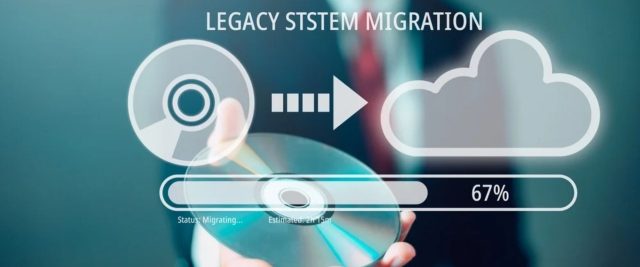
DHX Software helped a specialty camera retailer and service provider retire the custom legacy system it had relied on for approximately 35 years. Its sales, rentals, repairs, photo lab, inventory, and back-office operations now run on Odoo, creating a modern platform for continued improvement across the business.
A Specialty Retailer Running Several Businesses Under One Roof
Our client is a specialty retail and service business, and calling it a “store” undersells what happens there on any given day. Customers come in to buy equipment, rent gear for a weekend job or event, drop off items for repair, or use photo and imaging services. Each of those is its own line of business with its own rhythm, but they all share customers, inventory, and operational data across the business.
For decades, all of it ran on a custom Btrieve-based system built using Microsoft Basic and running under 16-bit MS-DOS. The environment had grown to several hundred programs supporting different parts of the operation. It did its job, and the team had shaped their daily routines around it, but the software had stopped growing with the business.
The Challenges of Running Retail, Rentals, and Repairs on an Aging System
The trouble wasn’t any one broken feature. It was the difficulty of connecting information and workflows across departments. The business needed better visibility across inventory, rentals, repairs, customer activity, photo lab operations, and accounting without relying on an aging custom platform.
Accounting presented another challenge. Staff-generated operational data did not flow cleanly into accounting, creating reliance on intermediary spreadsheets, duplicated effort, and limited reporting. The company’s online store also relied on manual CSV transfers for pricing and inventory, creating another disconnect between systems.
There was a bigger risk underneath. The legacy environment had little formal documentation, its original vendor was gone, and much of the knowledge required to maintain it rested with a small number of people. Changes depended on scarce institutional knowledge and aging technology. Leadership knew it was time to move. They also knew they couldn’t afford to lose the processes the business had refined over decades.
Odoo ERP Implementation and Legacy System Modernization
Discovery: Learning How the Business Really Runs
We didn’t start with software. We started by spending time with the people doing the work across sales, rentals, repairs, photo lab, accounting, shipping and receiving, and other operational areas. DHX conducted 25 remote and onsite stakeholder interviews, mapped departmental workflows, analyzed the legacy system and documented business requirements and data needs.
The team also worked through the legacy environment screen by screen, gathering system information and documenting functionality that had accumulated over decades. Many important business rules had never been formally documented. They existed in the old programs and in the heads of long-time employees, and we needed to capture them before anything could be replaced.
Building One System Around the Way They Work
With that map in hand, we set up Odoo around the client’s retail, rental, repair, photo lab and back-office operations instead of asking the team to bend to a generic setup. Customer records, inventory, sales, rentals, repairs, photo lab workflows, purchasing, deliveries, accounting and reporting were brought onto a shared platform.
The new environment was designed to give authorized staff access to shared operational data while maintaining appropriate role-based permissions. Where standard Odoo didn’t match how the business operated, we built customizations so the team’s established processes could carry over to the new platform. As requirements evolved, DHX also added functionality and refinement through additional development sprints.
Migration, Training, and Go-Live
Moving years of operational and historical data out of a custom system is where projects like this usually get hard. We planned the migration carefully, extracting, cleansing, mapping, testing, and reconciling data from the legacy environment before moving it into Odoo.
We set up role-based security so each person sees what they need, provided role-based and functional training, supported testing and issue resolution, and the release leading up to a successful go-live in October 2026.
Benefits of Odoo ERP for Specialty Retail Operations
The biggest change is that the business now has a centralized platform connecting customer, inventory, sales, rental, repair, photo lab, accounting, and other operational information that previously depended on an aging custom environment.
The new environment supports shared operational data, integrated departmental workflows, role-based access, and a stronger foundation for reporting and automation. It also creates opportunities to improve inventory visibility, rental-performance reporting, and operational decision-making as the platform continues to mature.
Just as important, the company has significantly reduced its dependence on undocumented, 16-bit legacy software and the institutional knowledge required to maintain it. Odoo gives the business a supported platform it can keep building on, while ongoing support and enhancement work allows the team to continue refining the processes it developed over decades.
Make Odoo Work Better for Your Business
Every business has its own way of getting things done, and your ERP should fit that, not the other way around. Whether you’re moving off a legacy system, rescuing an implementation that stalled, or trying to get more out of the Odoo you already have, DHX Software can help. We take the time to learn how you work, and then we build around it.
Explore Our Odoo Services